Seven teams, one platform question
Sumo Logic ingests and analyses enormous volumes of machine data. Its platform teams owned everything from collection and security to apps, billing, and multi-account management. Historically, each object-management workflow had been built independently, leaving users with inconsistent tables, actions, forms, and navigation.
My role was to help seven scrum teams solve shared problems as platform capabilities rather than one-off screens.
The mega-component
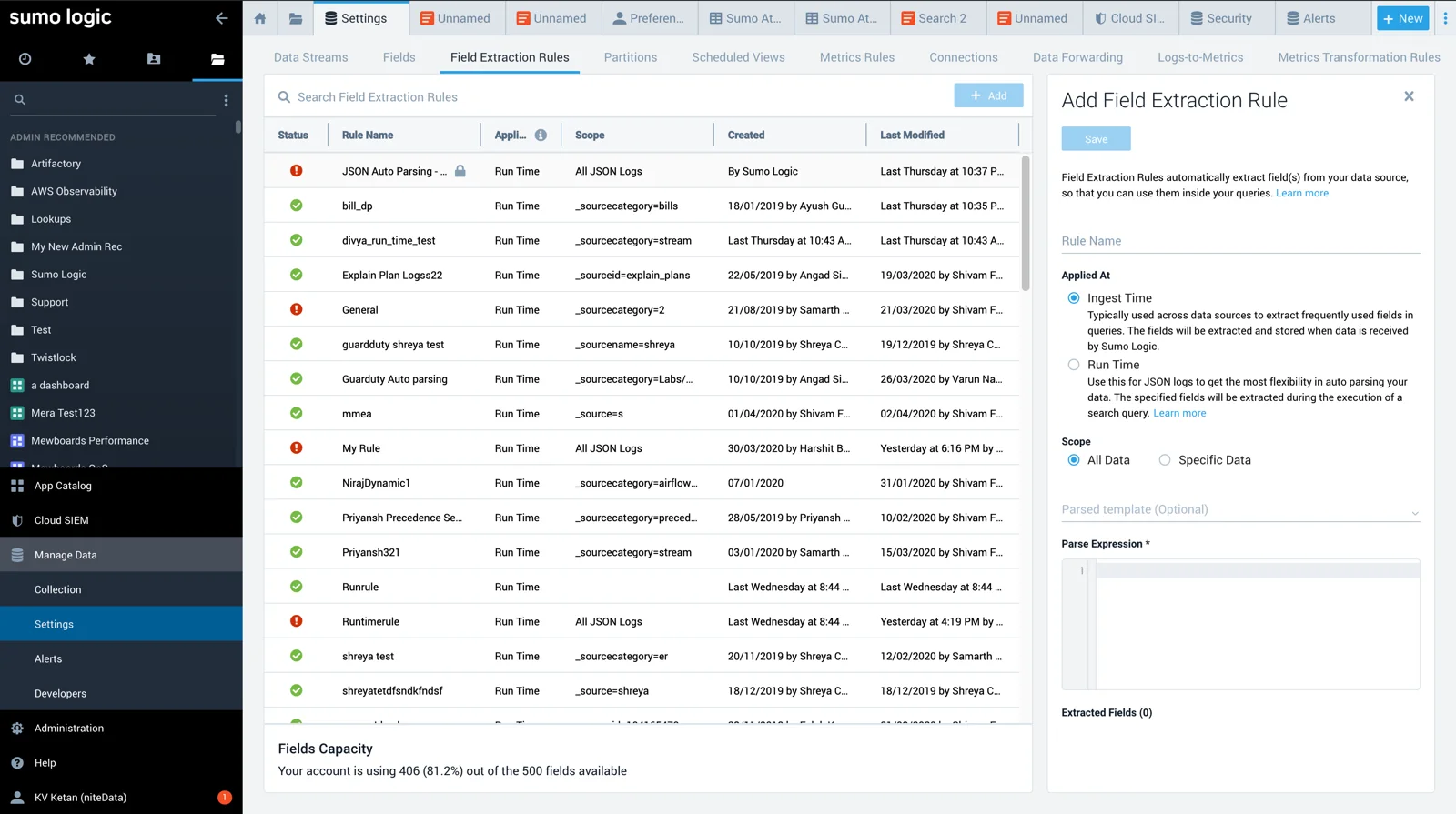
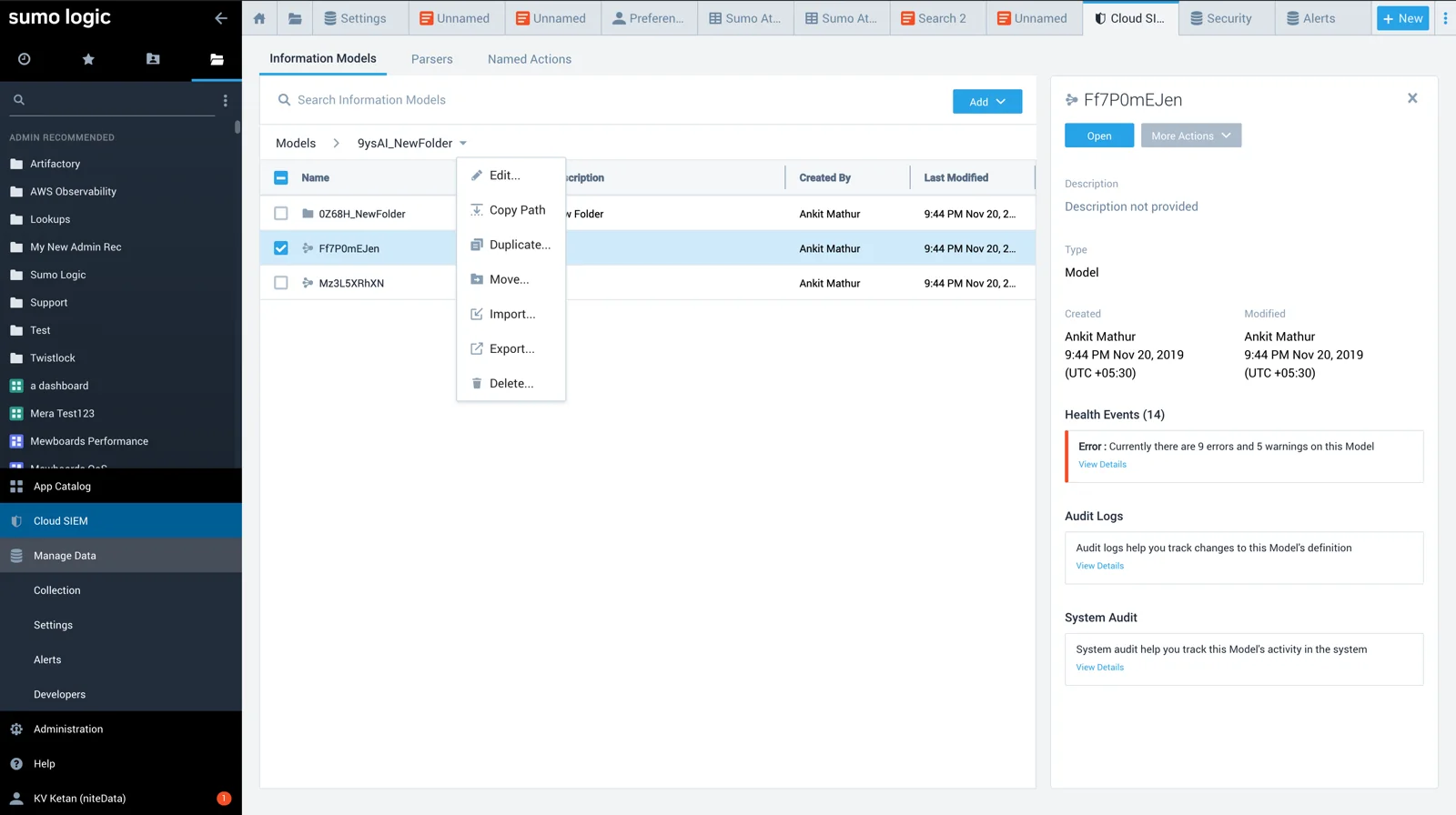
We designed a configuration-driven framework that could generate a standard management page from object properties, actions, and APIs. Tables, edit and create flows, audit history, health events, tree navigation, bulk actions, and import/export became reusable primitives.
A page that could take a development team more than four weeks could be assembled from API stubs in hours. More importantly, improvements to the framework propagated across every implementation.
Making the system explain itself
Support analysis showed that a large portion of customer problems came from infrastructure health issues users could often resolve themselves — if the product surfaced the right signal and remedy.
We built a health-event framework that developers could trigger from their services, then exposed those events both on the affected object and in a central view. The model later expanded into system audit notifications. Reuse followed from getting the underlying event model right, not from making screens look alike.
Forms generated from schemas
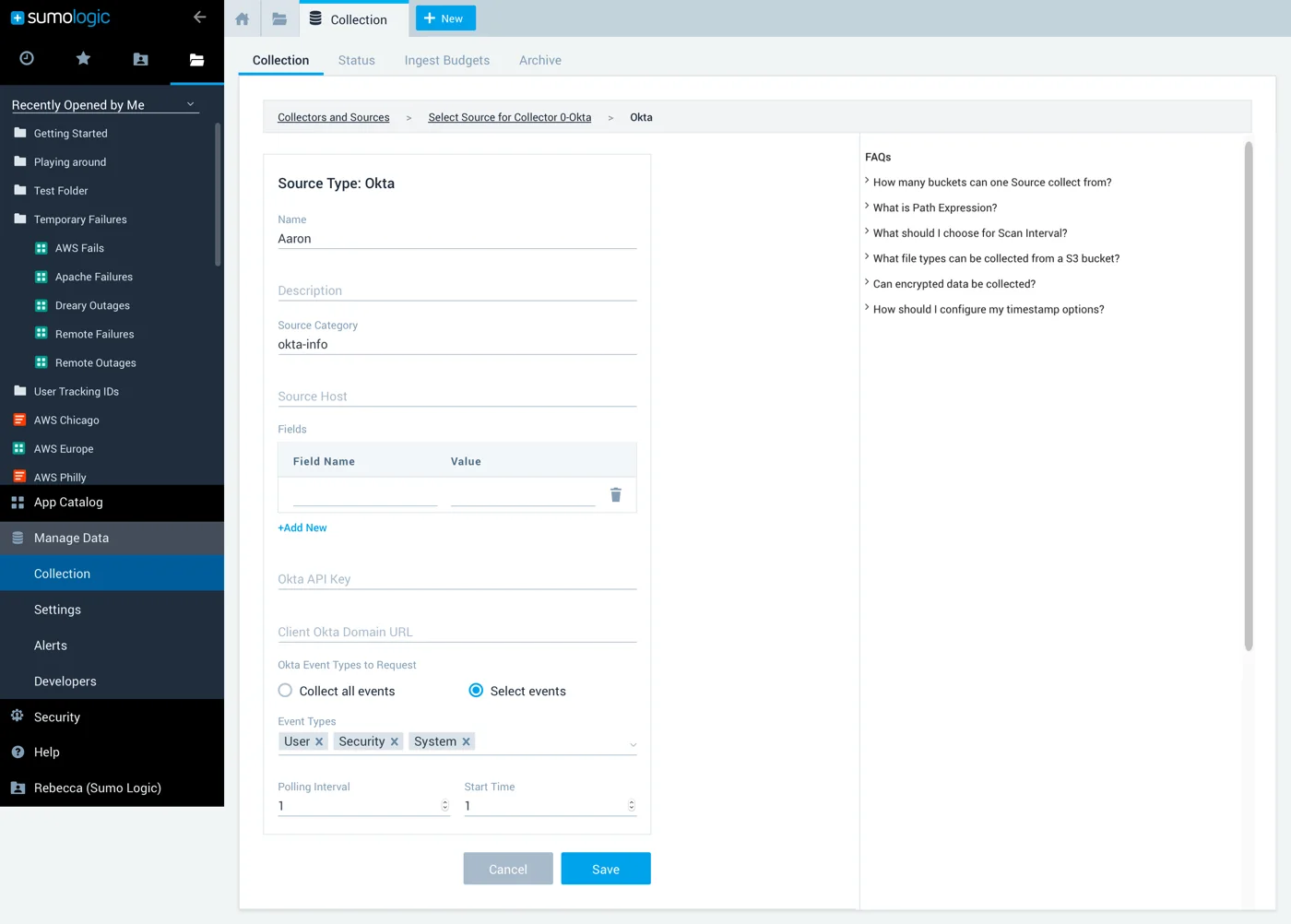
With more than 200 source types, manually designing every configuration form could never scale. We drove a schema-based form system that separated interface structure from source-specific payloads, while still supporting nested groups, widths, and responsive layouts.
Platform design is the work of turning today’s edge case into tomorrow’s safe default.
The most important outcome was not any single interface. It was a shift in how teams saw their work: as contributors to a product system other teams and customers could build upon.